editor

About Bert de Vries

This author has not yet filled in any details.
So far Bert de Vries has created 55 blog entries.

Acquiring knowledge: strong and weak knowledge

It is a very fundamental principle indeed that Knowledge is always gained by the orderly loss of information, that is, by condensing and abstracting and indexing the great buzzing confusion of information that comes from the world around us into a form which we can appreciate and comprehend. (K. Boulding) How do humans acquire knowledge? [...]
By |2024-10-03T15:28:09+00:00June 15th, 2023|Chapter 8|0 Comments

Fishing strategies: an agent-based simulation

Already for decades, ecologists are aware that proper modelling and management of fisheries has to incorporate the behaviour of fishermen. An early example was a model of two different fishing strategies (Allen and McGlade 1987). A more recent analysis investigates different harvesting strategies in an anegnt-based simulation model (ABM) (Brede and de Vries 2009). Let [...]

By |2024-04-17T13:35:20+00:00June 15th, 2023|Chapter 14, Chapter 9|0 Comments

Fisheries: a history of technology and oil

The force of technology is illustrated with some numbers. Fishing power, defined as the product of number of ships and potential catch per ship, has globally increased sixfold between 1970 and 2005. There was a massive increase in ship size, with supertrawlers as floating fish factories operating for months on sea. In 2016 the global [...]

By |2023-12-22T16:46:54+00:00June 14th, 2023|Chapter 14|0 Comments

Views of Nature and biodiversity

  To every natural form, rock, fruit or flower, Even the loose stones that cover the high-way, I gave a moral life, I saw them feel, Or link’d them to some feeling; the great mass Lay bedded in a quickening soul, and all That I beheld, respired with inward meaning.                                                                              Wordsworth, Prelude For the [...]

By |2024-11-06T09:57:07+00:00June 14th, 2023|Chapter 13, Chapter 2|0 Comments

Analogs and metaphors 

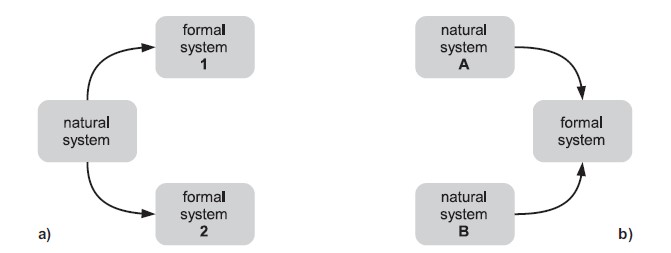
In an abstract scientific sense, modelling is a coding process and creates a relation between a ‘natural’ and a ‘formal’ system (Figure 1a; Rosen 1985). As scientists refine existing and construct new theories, there may (temporarily) be two different formal systems to describe the same natural system. An example of such complementarity is the wave [...]

By |2024-02-06T11:21:05+00:00June 14th, 2023|Chapter 8|0 Comments

Catastropic change in (eco)systems: case-studies

There are some empirical, illustrative case-studies in which catastrophic did happen. The first classical example is the interactive dynamics between the spruce budworm, its predators and the boreal forest  in North America (Holling 1986; Meadows 2008). When the budworm became a ‘pest’ and northern forests were sprayed with the insecticide known as DDT to control [...]

By |2024-02-07T16:07:17+00:00June 14th, 2023|Chapter 13, Chapter 8, Chapter 9|0 Comments

Putting the Sustainable Development Goals (SDGs) into perspective: the worldview approach

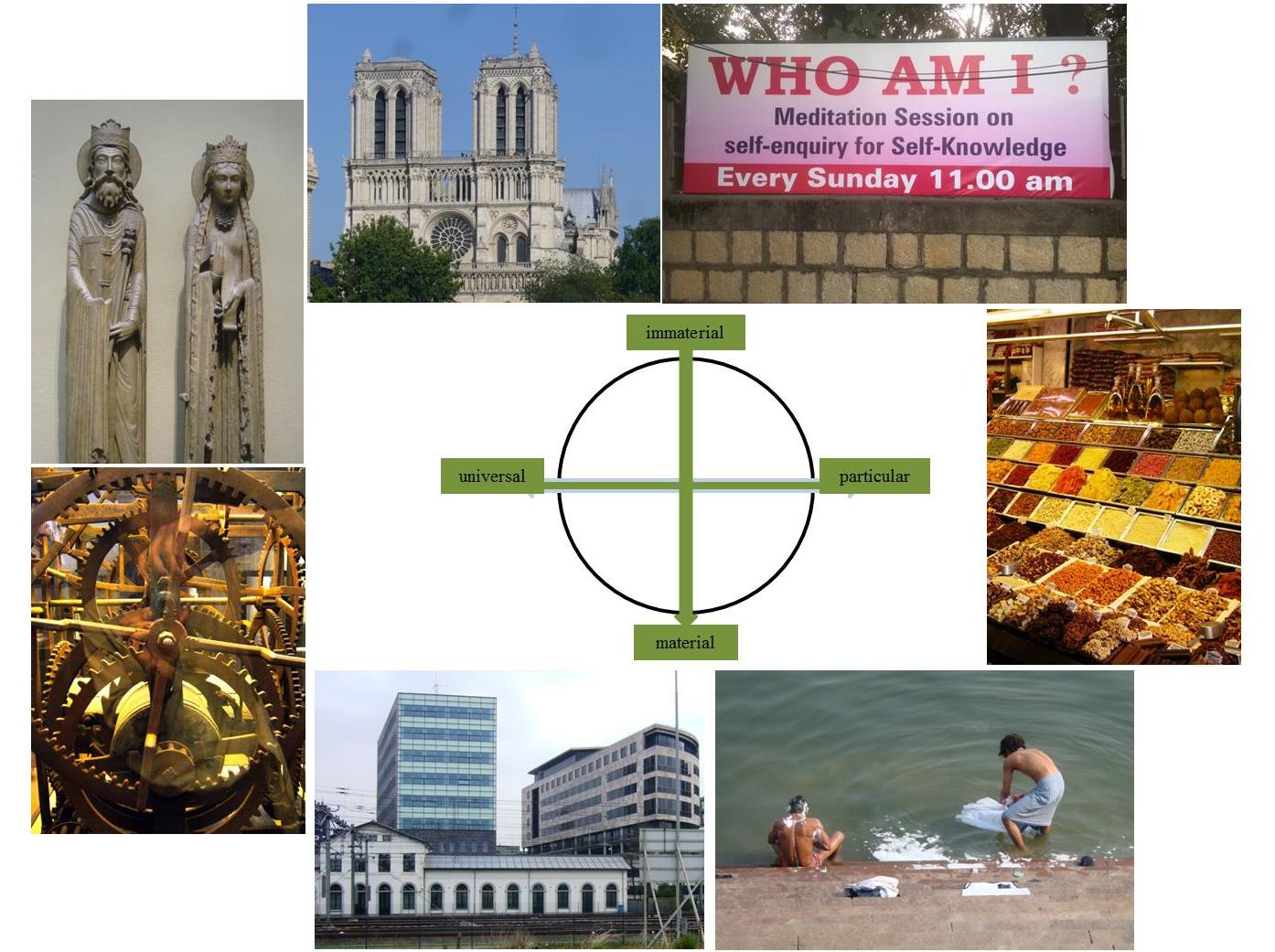
[see also this link here.] Global Sustainability 27 september 2019 (e18). The seven-plus billion human beings on the planet are increasingly connected through material and informational exchanges. Their everyday behaviour and their desires, emotions, aspirations and expectations are still very different and diverse, yet there seems to be a shared universal idea(l) about ‘the good [...]

By |2024-04-17T14:28:05+00:00November 22nd, 2018|Chapter 2, Chapter 6, Chapter 7|0 Comments
Go to Top