
To every natural form, rock, fruit or flower,
Even the loose stones that cover the high-way,
I gave a moral life, I saw them feel,
Or link’d them to some feeling; the great mass
Lay bedded in a quickening soul, and all
That I beheld, respired with inward meaning.
Wordsworth, Prelude
For the Chinese the bamboo expresses the will to survive, the spirit to endure under adverse circumstances. Great trees in their strength resist the winds and are broken; but the pliant, yielding bamboo, twirled and tossed about madly in the storm, bends and bows unresting, and survives. (Diana Kan, Chinese painting 1979:45)
Nature in Modernity
Individual people have quite different values, feelings and experiences in relation to Nature (§2.2). For poor farmers and herders in the world’s villages, it is a source of food and beauty but also a place of danger filled with wild animals, diseases and floods. For all of us, the uncontrollable forces of Nature are feared in earthquakes and tsunamis. Nature also is and has always been a source of awe and spirituality and a way to connect to life, perhaps even more as the sciences probe ever deeper into the mysteries of life. At the same time, millions of people have a different experience of Nature, as expressed by a young urbanite: “I’m happy in the urban jungle.” Nature means holiday trips, adventure travels and marvelous documentaries on your tv, laptop or smartphone, or the garden or garden center. For ever more people, trees, water, wild nature, agriculture and livestock have become a distant, mediatized experience and, particularly for children, contact with animals is limited to pets, zoos and – often weird – animations. Indeed, this too does bring new economic activity: in 2007, the pet food market for dogs and cats amounted to more than U.S. $45 billion and was dominated by only four global corporations.
In the Modernity worldview (A1-B1), nature is primarily seen as a resource satisfying basic as well as luxury desires, with a huge role of (access to) resources a huge role in politics and warfare (§5.5). Decisions about de/reforestation, wildlife preserves and biodiversity, intensive agriculture and water pollution are usually made in a social-utilitarian fashion. Decomposing Nature into quantifiable stocks of ‘natural capital’ and monetizing flows of ‘ecosystem services’ is part of it How nature was seen depended in antiquity – and in many places still – on its actual or potential threat to humans. Nature, with its unpredictability and threats, was in no way always a friend. Therefore, it was permitted, and even a duty, to fight it, as can be seen in a variety of cultural motifs. The disappearance of forests was seen as a sign of civilisation, at least in the dominant view. Clearing forests for agriculture, wood, firewood and animal grazing was the main cause of deforestation. Timber demand was another one. Thirgood (1981), quoting Strabo, mentions the mountains in southeastern Spain ‘covered with thick woods and gigantic trees’, being cut for shipbuilding. North Africa was another important timber-producing region for the Romans, leading to temporary depletion of Moroccan forests. Wars had a devastating effect as it accelerated the felling of trees to be used for the warships and made people flee into the mountains and abandoned their land. Wild animals were another aspect of nature. Heracles battled with near-invincible mythical wild animals, becoming a symbol of courage. The Roman Emperors wanted not only slaves but also wild animals to be taken from the conquered lands and to be emblems of total dominance over man and animal. More intense hunting brought some species to extinction. The enormous demand for animal skins, from as far as the Baltic and northern Russia, further increased the pressure. The Pax Romana acquired a specific connotation through the mass killing of wild animals. Thousands of wild animals were slaughtered in the venationes during the games or ludi. These took place in every garrison town, but Rome had by far the largest. With the inauguration of the Colosseum in 70 AD, some 5,000 animals were ‘used’ in a few days time. It must have given rise to huge transport problems. Only recently, it has been acknowledged that the grand scale of these killings may have led to the extinction of some of these species. The games may indirectly have contributed to the expansion of agriculture in the Mediterranean by strongly reducing the threat from wild animals – an idea that fits into the view that humans should ‘civilise’ the world and was, therefore, approvingly supported by scholars until recently. [MORE TO BE ADDED?]
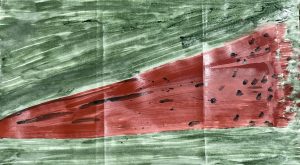
On request of EU Directorate-General Environment, Eurobarometer has asked more than 27.000 European Union citizens in spring 2010 how familiar they are with the term biodiversity and with the concept of biodiversity loss (EC 2010). Two-thirds of these citizens were familiar with the term biodiversity in the sense of knowing the meaning (38%) or having heard of it (28%). Thus, more than one-third (34%) have never heard of the term and, unsurprisingly, respondents with low-level education, manual workers and non-working respondents are significantly overrepresented in this group. As to biodiversity loss, 43% says that it is about certain animals and plants disappearing and 19% that certain animals and plants are endangered. Therefore, it is primarily associated with species, although a minority (13 to 18%) mentions habitat change, declining forest and loss of natural heritage. There are significant differences between countries. Most knowledgeable and best informed are the citizens of Germany and Austria. The survey also posed questions about the threats to biodiversity and the importance of protecting biodiversity and natural areas. More than a quarter of the interviewees mention air and water pollution as the greatest threat to biodiversity. Next come intensive farming, deforestation and overfishing (19%), climate change (13%) and the creation of more roads, houses or industrial sites and land use changes (9%). The perception of the seriousness of biodiversity loss varies widely. Whereas in Finland only 9% consider biodiversity loss a very serious domestic problem, it is about two-thirds in Italy, Greece, Romania and Portugal. A large majority consider it a very serious global problem. Over three-quarters of citizens thinks that biodiversity should be protected for moral reasons but also because it is essential for economic prosperity. One-third of the respondents opt for stricter regulation, about one-fifth prefer a focus on better information. The results also indicate that there is relatively low familiarity with the Natura 2000 European Union-wide network of nature protection areas. The difficulty of drawing conclusions in situation of divergent values, beliefs and interests is illustrated with the practical example of the Dutch Oostvaardersplassen. It is an area of 5600 ha of swamps, reeds and grasslands in one of the polders. It is, for Dutch people at least, ‘wild nature’, unmanaged and with birds, deer, horses and other animals. Ecologists point out that it shows how nature evolves without human intervention, but massive starvation in winter led to accusations of causing animal suffering; a nearby airport may make it necessary to kill geese for security reasons; farmers complain that it is a waste of high-quality farmland; the tourism sector advocates the construction of a network of walking- and bicycling paths; and hunters are impatiently waiting for permits. It may be argued that this is a luxury problem in a country which anyway has no nature left. Indeed, there is much more at stake in decisions about logging in the African or Indonesian tropical forests or even road construction in the Alps. Yet, the question remains: how to decide? The worldview approach suggests possible strategies. A person’s background can also play an important role. Last summer I attended a retreat near Lake Balaton, where we discussed the relation between humans and Nature. Some participants brought in flowers, others drew the sun – and the biologist among us came with a telling painting shown in the figure above. In his view, mankind has been ‘conquering’ Nature for the last ten millennia, at an accelerating pace – the red covering the green in the painting. What might happen in the future is that Nature starts to reconquer the space it lost – the black dots. Only those human communities will survive who are able to somehow adapt to the new situation, just and perhaps less successful than many other species. It is worth pondering occasionally on such a long-term evolutionary-biological perspective too. Footnotes [1] To give an impression of accounting proposals: The Economics of Ecosystems and Biodiversity (TEEB) to capture values, payment of ecosystem service (PES), REDD+. Green Accounting and Inclusive Wealth, UN-SEEA, Natural Capital project with InVEST, ecological budgeting, Corporate Ecosystem Service (ESR), Artificial intelligence for Ecosystem Services (ARIES)(Folke et al. 2011). [2] This box is based upon a contribution from Jan Boersema, Vrije Universiteit Amsterdam, in de Vries and Goudsblom (2002). Literature PBL (Netherlands Environmental Assessment Agency)(2010). Rethinking Global Biodiversity Strategies. Download at www.pbl.nl/enNature in European Antiquity [2]
Attitudes towards biodiversity
Leave A Comment