Chapter 3

Ancient settlements and resource depletion

Resource overexploitation may have been around from the earliest times. There is evidence that early 9th millennium BP villages collapsed around 8500 BP, while new settlements were founded in quite variable landscapes in the same period. One of the largest, over 12 ha in size, was Ain Ghazal in southern Jordan (Rollefson 1992; Redman 1999:107-110). [...]
By |2024-05-10T13:57:57+00:00February 6th, 2024|Chapter 3|0 Comments

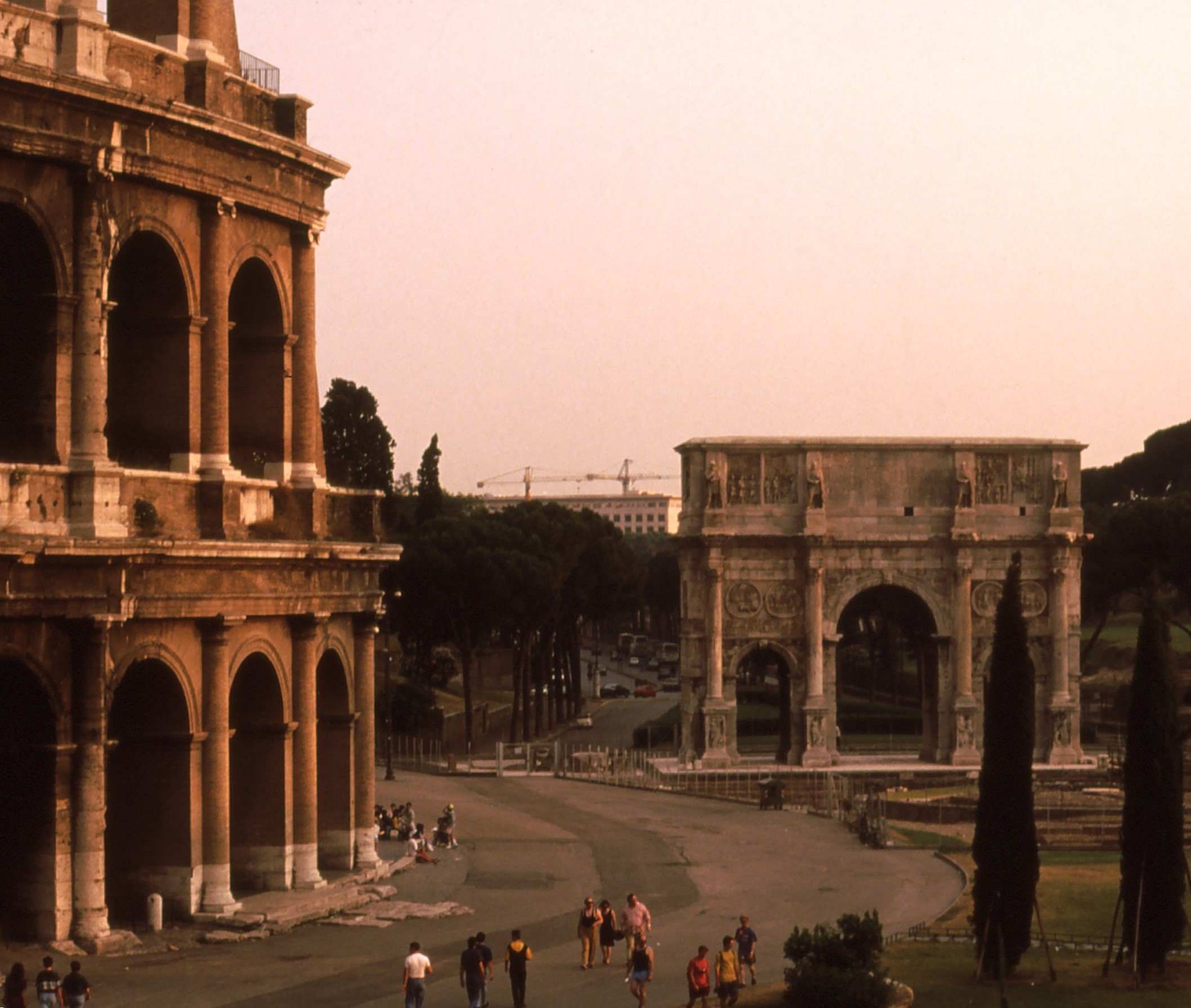
Energy: the Colosseum, slaves and containerships

The energy needed to deliver energy has always been a concern for societies. ‘All our societies require enormous flows of high-quality energy just to sustain, let alone raise, their complexity and order (to keep themselves [ . . . ] far from thermodynamic equilibrium) ... [and] after a certain point in time, without dramatic new [...]

By |2024-02-06T11:28:43+00:00July 13th, 2020|Chapter 13, Chapter 17, Chapter 3, Chapter 7|0 Comments

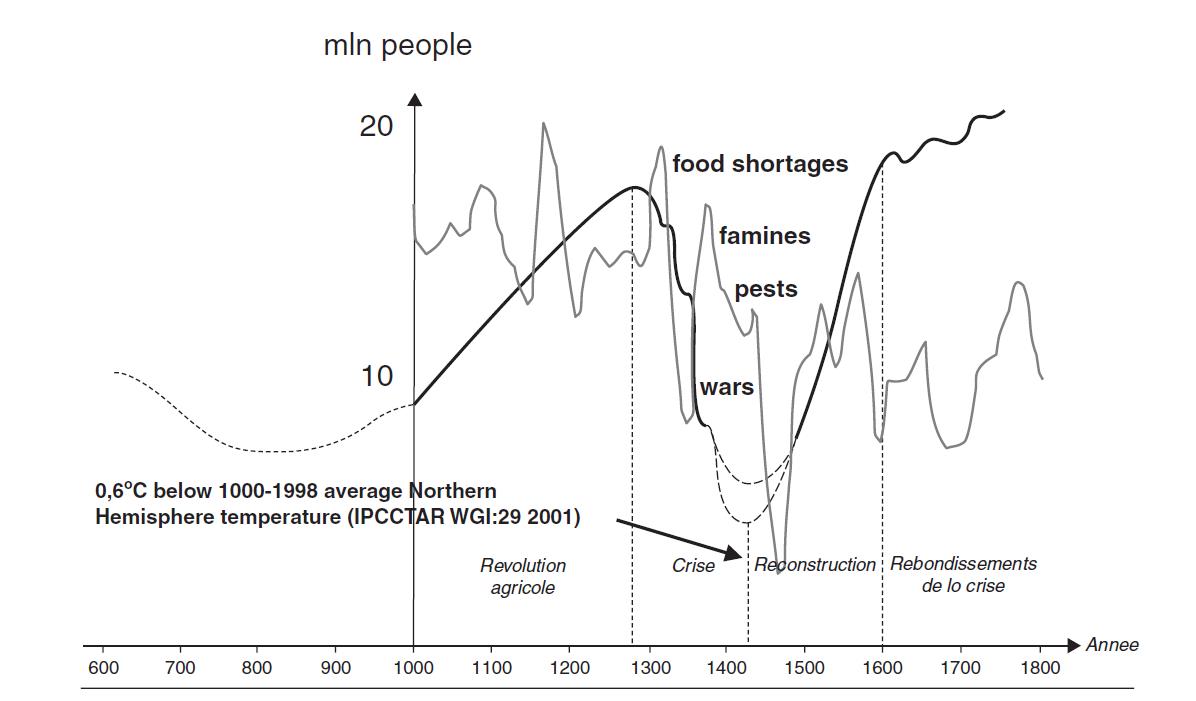
Population overshoot, collapse and recovery: the role of climate change in medieval Europe.

Climatic changes have always played a role in human history. Often, it resulted from large volcanic eruptions, which caused a decline in temperature with serious impacts on food supply. Slow variations in geological evolution and planetary position played a role too, at (much) longer time scales. All climatic changes and their impacts tended to be [...]

By |2024-05-08T10:24:35+00:00May 4th, 2020|Chapter 11, Chapter 12, Chapter 3|0 Comments

Demographic and territorial overshoot: India and Russia

India since the 16 th century Several historical accounts reinforce the impression that large populations of humans were living close to the environment’s carrying capacity and went through periods of severe food shortages and associated violence and hardship. One such a tale is about India since the 16th century; another one is on Russia in [...]

By |2024-10-01T14:24:30+00:00October 30th, 2019|Chapter 11, Chapter 12, Chapter 3|0 Comments

Colonists, Inuit, and the Church: a story of maladaptation

Danish colonisation of Greenland started in 1721, but a Norse colony in west Greenland had already been an outpost of Europeans throughout the period 985–1500 AD. There had been contacts between North American hunters and European farmers. It seems that the Norse community managed quite well for the first 150 years, with a maritime-terrestrial economy [...]

By |2023-11-13T21:30:49+00:00October 12th, 2018|Chapter 3, Narratives|0 Comments

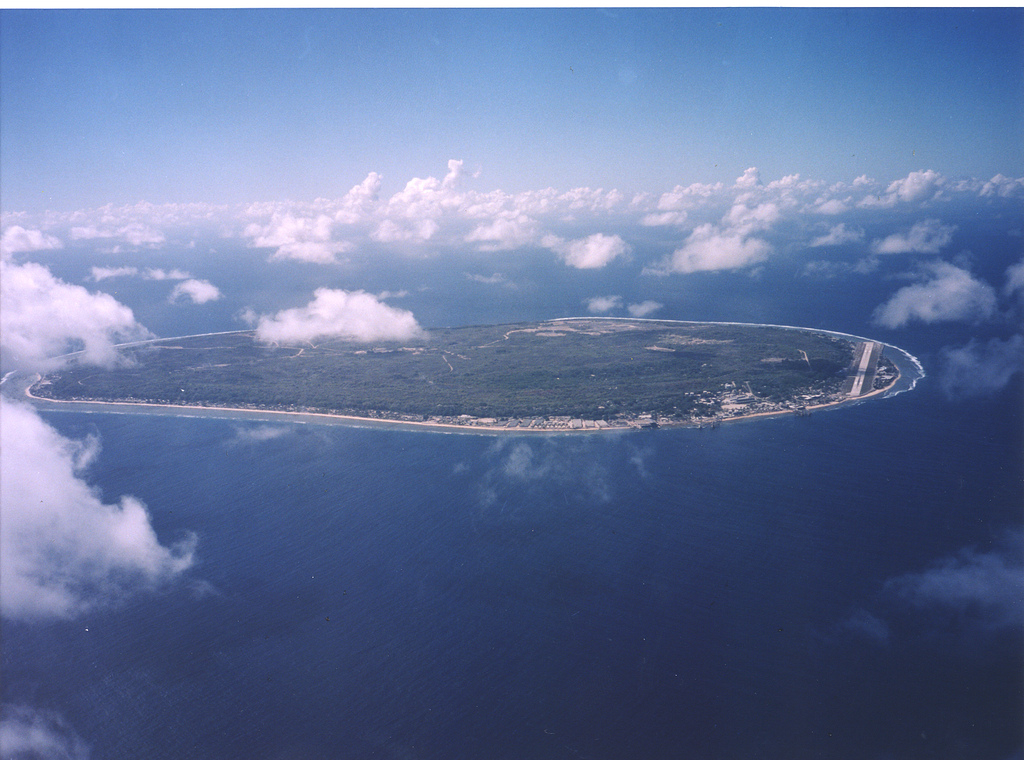
Nauru: phosphate, fish, money and refugees on a 21st century Easter Island? *

Some 1500 km east of Papua New Guinea, in the Pacific, is the small island of Nauru. It is the smallest independent republic, with nowadays some 12.000 inhabitants on an area of less than 25 km2. The story of Nauru's ‘discovery’ in 1798 by a British captain who gave it the name Pleasant Island and [...]

By |2023-12-09T17:56:22+00:00July 3rd, 2015|Chapter 15, Chapter 18, Chapter 3, Narratives|0 Comments
Go to Top