
CHAPTER 15
Land and agro-food systems
Agro-food systems consist of a chain from land use and land cover(LULC), conversions and food production to waste flows and packaging debris.
- Despite improvements in food production, a sizeable fraction of human population is still underfed. Another and growing part is obese. Both have serious health impacts. Food trade has grown enormously, with generally speaking positive effects on food security but novel risks of dependency and loss of resilience;
- Food production has been a co-evolution in which hunter-gatherer, subsistence farming and pastoralism gradually changed into more intense practices such as rice growing, mixed farming and commercial grazing. The global output of cereals and animal protein has risen steadily and, in the last half century, exponentially. This has been achieved on only a slightly larger area because productivity did increase through expansion of irrigated area, use of fertilisers, herbicides and pesticides, better land management and other achievements of Modernity;
- There is a large spread in the types of farmers and their contributions to food output, but there are clear trends towards high-tech high-yield agriculture and concentration in the hands of a limited number of multinational corporations. This is driven by a few causal loops, notably cost competition, upscaling and innovation. Governments and corporations have become the major actors, with food security, innovations and profits as major objectives;
- Scientific analyses indicate that there is little room for new agricultural lands (extensification) due to other claims on land. There is room for another 40-60% increase in food production (intensification), but it is dependent on feasibility and acceptance of new technologies;
- The intensification had and has unintended and undesired side effects, such as input dependence and environmentally harmful It endangers long-term sustainability and causes (the need for) social, environmental and health regulations. A variety of directions and initiatives towards structural transformation can be experimented with and are necessary for the path towards more sustainable food systems. They differ in their underlying worldview and the search is for integrative pathways.
Test your understanding of this chapter by reviewing the study questions below.
All Materials Relevant to this Chapter
Guar gum: Indian farmers and USA gas fracking
Angkur Pailiwal and Jyotika Sood tell an interesting story about the rapidly increasing demand for guar gum for use in the exploitation of shale gas (‘frackgas’) in Down to Earth . It shows the interconnectedness in [...]
Food Price Elasticity
Estimating food demand Past food demand equals use by definition and is determined from historical measures and correlations. To estimate long-term future food demand, populations at country level are segmented by income group and by [...]
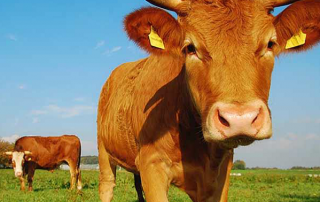
Meat in Europe: a worldview assessment
The consumption of meat is increasingly becoming controversial as a spectrum of activists point at the negative side-effects for animal welfare, human health, local pollution and climate change inducing greenhousegas emissions. The meat industry and [...]
Drought: the thin line between natural and man-induced change
A simplified scheme of the hydrological stocks and flows is given below. The climate variables precipitation and temperature over time are the most important input variables. Rainwater will fall upon the vegetation and partly flow [...]

Nauru: phosphate, fish, money and refugees on a 21st century Easter Island? *
Some 1500 km east of Papua New Guinea, in the Pacific, is the small island of Nauru. It is the smallest independent republic, with nowadays some 12.000 inhabitants on an area of less than 25 [...]
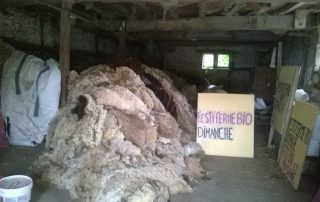
Can and Should Rural France Be Saved?*
‘When you understand that the take-it-or-leave-it prices now being offered [by wholesalers] mean that you’ll pay more to produce crops than you’ll get back in proceeds, you’re left with the choice of either becoming a [...]
Nomads in Mongolia*
Nomadic people of the Eurasian steppes have played a significant role in human history. Notable are the records of nomadic invasions in the 4th and 5th century and, later, of the Mongols in the 13th [...]