
CHAPTER 6
The Worldview Framework
In order to engage with and operationalize sustainable development and the SDGs, it is important to reflect on what people need, value and belief, in other words: on people’s worldviews.
- The worldview framework posits two dimensions. A horizontal dimension represents the extremes between a ‘subjective’ world with a focus on the local and particular, and an ‘objective’ world believed to follow universal rules. A vertical dimension represents the change from the biological-material roots of human life to individual and collective awareness and manifestations of the divine and the transcendent;
- Each corner in the resulting worldview space can be associated with preferred values, beliefs, ideals, rules and rituals – also with respect to sustainability issues. The framework is used to interpret the trajectory of Modernity in European history and to sketch a theory of social dynamics. Its use in a student assignment is another application;
- It is hypothesized that sustainability, and (human) dignity and flourishing, are to be found in the center of worldview space: searching for the middle ground is a well-known precept in ancient philosophies, religions and myths. In the center, the integral worldview exists in a dynamic equilibrium between centripetal and centrifugal forces. It is also the place of the agora and the community, which has always been a repository of values and beliefs, incorporated in traditional and modern culture(s);
There are several ways to organize pathways to the center: dialogue and public discourse, forging coalitions and alliances, initiating and implementing inter- and multinational agreements, and constructing narratives complementary to the still dominant narrative of Modernity. There is also an important role for experiments in eco-communities and for the arts.
Test your understanding of this chapter by reviewing the study questions below.
All Materials Relevant to this Chapter

Chinese Worldviews
In the book Sustainability Science, I have argued that the location of sustainability is in the center of worldview space, where the balance is found between individual and collective and between material and immaterial (§6.3). [...]
Identifying and measuring beliefs: two case-studies
An analysis of the outcomes of the World Value Survey (§4.2) over the period 1989-2004 has been used to identify popular support for the transition to a market economy in India and China (Migheli 2010). [...]
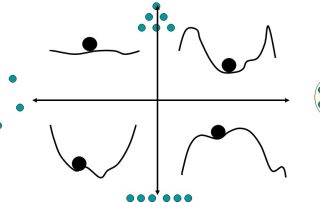
Social dynamics in Cultural Theory
Cultural Theory interprets social-cultural change as a continuous, dynamic interplay between the adherents of the four perspectives (Thompson 1992, 1997; Vries 2023). Individuals alter their perspective when it is no longer reconcilable with their experience. [...]
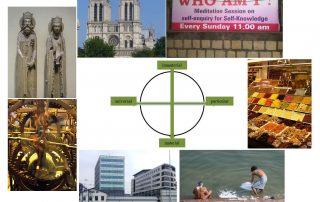
Putting the Sustainable Development Goals (SDGs) into perspective: the worldview approach
[see also this link here.] Global Sustainability 27 september 2019 (e18). The seven-plus billion human beings on the planet are increasingly connected through material and informational exchanges. Their everyday behaviour and their desires, emotions, aspirations [...]

The Relational Trend: Values, Knowledge and Worldviews Revisited
Values and knowledge are two important concepts in sustainability science. Recently, new framings for these concepts have been proposed, both of which place our social relationships at the centre of the discussions: one is the [...]

The lure of flying – and the flyprint
Living on a plane. "Ana-Maria P. is the president of Powerstorm, a US company working on sustainable telecom solutions focused on reducing CO2 emissions in emerging markets. How often do you travel? I basically live [...]
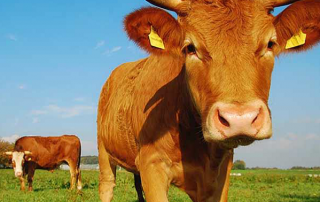
Meat in Europe: a worldview assessment
The consumption of meat is increasingly becoming controversial as a spectrum of activists point at the negative side-effects for animal welfare, human health, local pollution and climate change inducing greenhousegas emissions. The meat industry and [...]

Top-down or bottom-up, that is the question?
Every now and then I meet friends who have given up on changing the world: “It is too complex, too violent, too far away, and I feel powerless in the face of it. So I [...]
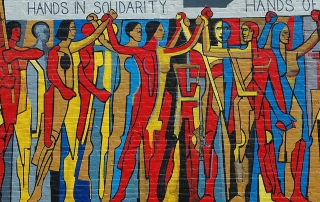
Sustainability and solidarity: recipes from a political scientist
Reading the Sustainable Development Goals (SDGs) that were agreed upon by the United Nations in 2015 in the document Transforming our world: the 2030 Agenda for Sustainable Development (sustainabledevelopment.un.org), I am struck by the high [...]
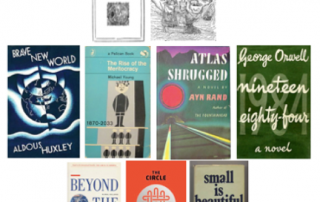
Utopias: Imagined futures as orientors for worldviews
Worldviews often orient themselves to particular ideals, about human individuals and societies. Famous descriptions of an ideal society in literature are known as utopias: a place (τοπος) that is good (ευ) – or, in another [...]