
CHAPTER 13
Nature: the life-support system
Speaking about Nature, the first association is with land – although two thirds of the earth surface is water. In science, nature is also categorized in various ways.
- Landscapes are classified with a number of characteristics of soil, vegetation and climate, as for instance in the Holdridge life zone classification and the net primary production (NPP; §11.2). With satellite data, vegetation maps can be constructed. Putting humans in one gets the Anthrome maps;
- Millennia of human interference with the landscape have caused historical land use and land cover (LULC) changes. The most important driving forces are clearing for food, urbanisation, infrastructure and mining. One consequence is land degradation from erosion, desertification and desalinization. It negatively impacts human populations and ecosystems in several places, but there are increasing efforts at restoration;
- The concept of ecosystems and associated concepts such as foodwebs, ecological resilience and biodiversity belong to the core of sustainability science. Resilience is the capacity to preserve identity by absorbing the impact of disturbances and/or rebuilding a post-disturbance system. Biological systems can teach important lessons, notably to design and act in a sub-optimal and not an optimal mode;
- A major consequence of land use land cover (LULC) changes are losses in biodiversity. The decline in species and ecosystems cause a loss of ecosystem services (ES), a concept that has been coined to emphasize the beneficial functions of biodiversity for humans and to make it quantifiable for circles of economists and politicians. It is not without controversy;
- To intervene in ecosystems, for better or worse, one should have an understanding of their dynamic evolution. A variety of models have been developed, from simple predator-prey population models to regime shifts in climax ecosystems.
- The evolution of Homo sapiens took place in a relatively stable climate. Food production and burning fossil fuels emit greenhouse gases (ghg) which are changing the earth climate and increase the probability of occurrence in frequency and intensity of heat waves, heavy rains and big droughts is expected. In the longer run, sea level is expected to rise. Both will affect (the integrity of) eco- and human systems. To reduce the risks to what is considered ‘manageable’, both mitigation and adaptation are needed in this social dilemma situation.
- Upon entering the Anthropocene, the relation between humans and Nature has to be revisited. This can be done by complementing the dominant worldview of Modernity with the values and beliefs from other worldviews and exploring the potential for synergy and alliances. This is more urgent now that the idea of Nature as a passive force is obsolete: she is responding to the ever larger and mostly destructive activities of the human race.
Test your understanding of this chapter by reviewing the study questions below.
Readings
Related websites
All Materials Relevant to this Chapter
Climate cosmopolitics: PhD thesis by Isak Stoddard
On friday 7 march 2025, my friend and colleague Isak Stoddard defended his PhD thesis Perilous times: Carbon budgets and the cosmopolitics of climate mitigation at Uppsala University. Below is the abstract in english from [...]
Catastrophe Theory and Tipping Points
Modelling catastrophic change The simplest mathematical equation that represents bifurcations and catastrophic change is a first order differential equation of the form: (eqn. 1) Solving for the attractors (dX/dt = 0), it is seen [...]
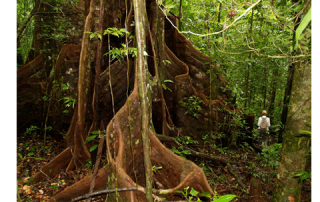
Views of Nature and biodiversity
To every natural form, rock, fruit or flower, Even the loose stones that cover the high-way, I gave a moral life, I saw them feel, Or link’d them to some feeling; the great mass [...]
Catastropic change in (eco)systems: case-studies
There are some empirical, illustrative case-studies in which catastrophic did happen. The first classical example is the interactive dynamics between the spruce budworm, its predators and the boreal forest in North America (Holling 1986; Meadows [...]

Energy: the Colosseum, slaves and containerships
The energy needed to deliver energy has always been a concern for societies. ‘All our societies require enormous flows of high-quality energy just to sustain, let alone raise, their complexity and order (to keep themselves [...]
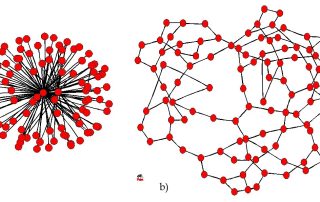
Networks: one way to understand system behaviour
Definitions Systems consist of elements and their interrelations or linkages. The relations between elements have received ever more attention in science, reinforced by the advent of ICT and in its applications in social media and [...]

The Kaibab narrative: management on ill-understood systems
History of Kaibab plateau Numerous models of ecosystems have been made – but sometimes one wonders whether somewhere a reality can be found which more or less is described by such a model. The term [...]

Forests in Japanese history
Forests in Japan have been under pressure already for millennia (Totman 1989). More than 2000 years ago, rice culture caused the first dramatic modifications of woodlands and bronze and iron smelting started to put pressure [...]
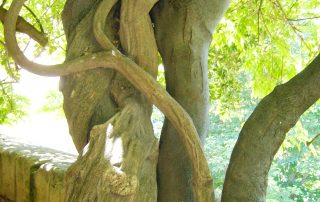
Top-down or bottom-up, that is the question?
Every now and then I meet friends who have given up on changing the world: “It is too complex, too violent, too far away, and I feel powerless in the face of it. So I [...]
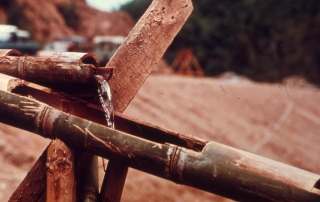
Drought: the thin line between natural and man-induced change
A simplified scheme of the hydrological stocks and flows is given below. The climate variables precipitation and temperature over time are the most important input variables. Rainwater will fall upon the vegetation and partly flow [...]