
CHAPTER 11
Population: Humans and their habitat
During the Holocene, the human population has increased from a few million to nearly 8000 million. This expanding human habitat interferes ever more with the natural world, in extent and intensity.
- In early 21st century, world population is stabilizing as part of a demographic transition, pushed forward by better health, education (of women), income and other factors. It is part of Modernity and is usually assumed to continue;
- Human behaviour plays a crucial role in demographic evolution. Biologists emphasize evolutionary mechanisms, such as the relative roles of cooperation/altruïsm and competition/egoïsm and the coevolution with the environment in niche construction. Social scientists focus more on the role of organization and culture. The ability to interact, work together and communicate explains part of the success of Homo Sapiens;
- Human populations have experienced deep transformations in metabolic regimes, during which human-environment interactions played a key role. Different stages are characterized by archetypical patterns of vulnerability: syndromes. With disposition as indicator of the probability that a syndrome occurs, the exposure and sensitivity determine whether and how the syndrome affects the region. The coping capacity is the capability to prevent or mitigate the consequences;
- Some of the hot topics in relation to population growth, such as birth control, abortion and migration, can best be studied and discussed in a worldview framework.
Test your understanding of this chapter by reviewing the study questions below.
All Materials Relevant to this Chapter

Population overshoot, collapse and recovery: the role of climate change in medieval Europe.
Climatic changes have always played a role in human history. Often, it resulted from large volcanic eruptions, which caused a decline in temperature with serious impacts on food supply. Slow variations in geological evolution and [...]
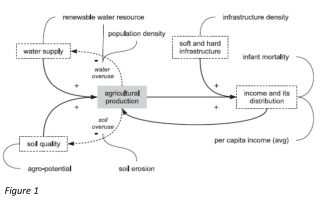
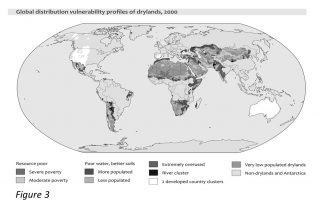
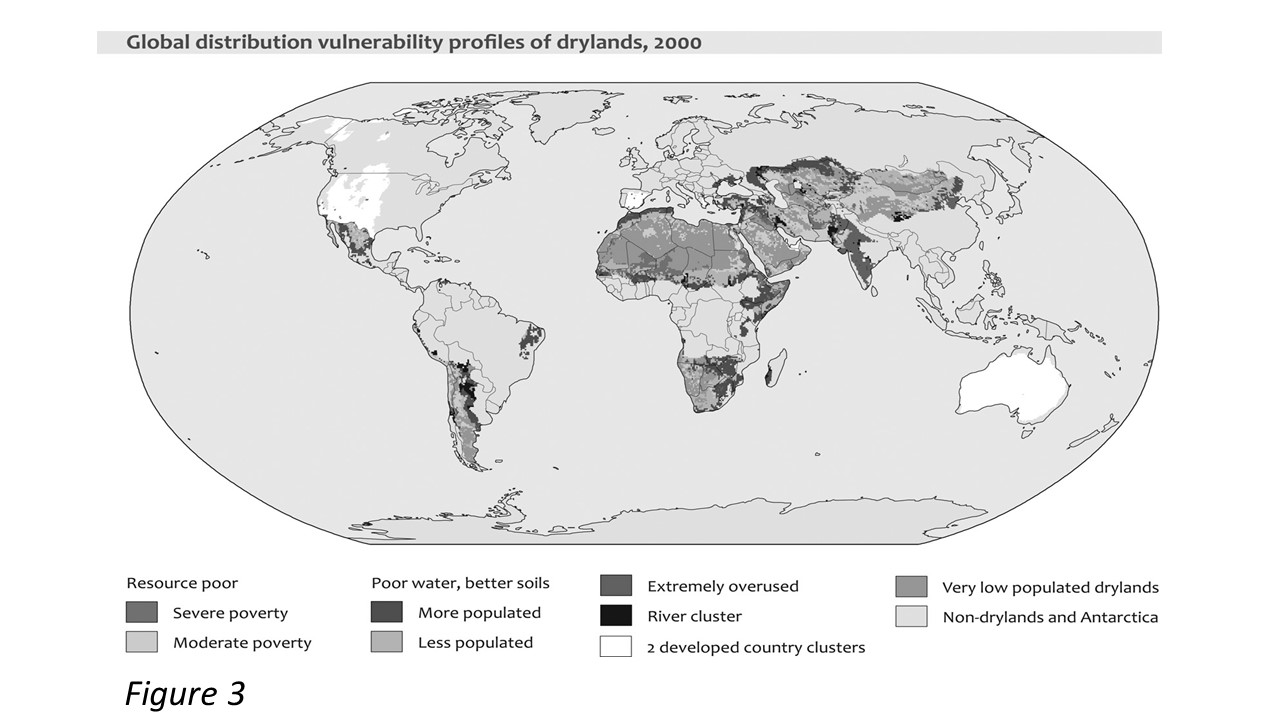
Syndromes: in search of generic patterns of vulnerability and resilience
A fragmented, disciplinary approach does not work in sustainability science. A broader perspective transcending disciplinary boundaries is needed. One framework to investigate global change phenomena in such a broader, problem-oriented setting is the syndrome approach, [...]
Demographic and territorial overshoot: India and Russia
India since the 16 th century Several historical accounts reinforce the impression that large populations of humans were living close to the environment’s carrying capacity and went through periods of severe food shortages and associated [...]
Nomads in Mongolia*
Nomadic people of the Eurasian steppes have played a significant role in human history. Notable are the records of nomadic invasions in the 4th and 5th century and, later, of the Mongols in the 13th [...]