
CHAPTER 13
Nature: the life-support system
Speaking about Nature, the first association is with land – although two thirds of the earth surface is water. In science, nature is also categorized in various ways.
- Landscapes are classified with a number of characteristics of soil, vegetation and climate, as for instance in the Holdridge life zone classification and the net primary production (NPP; §11.2). With satellite data, vegetation maps can be constructed. Putting humans in one gets the Anthrome maps;
- Millennia of human interference with the landscape have caused historical land use and land cover (LULC) changes. The most important driving forces are clearing for food, urbanisation, infrastructure and mining. One consequence is land degradation from erosion, desertification and desalinization. It negatively impacts human populations and ecosystems in several places, but there are increasing efforts at restoration;
- The concept of ecosystems and associated concepts such as foodwebs, ecological resilience and biodiversity belong to the core of sustainability science. Resilience is the capacity to preserve identity by absorbing the impact of disturbances and/or rebuilding a post-disturbance system. Biological systems can teach important lessons, notably to design and act in a sub-optimal and not an optimal mode;
- A major consequence of land use land cover (LULC) changes are losses in biodiversity. The decline in species and ecosystems cause a loss of ecosystem services (ES), a concept that has been coined to emphasize the beneficial functions of biodiversity for humans and to make it quantifiable for circles of economists and politicians. It is not without controversy;
- To intervene in ecosystems, for better or worse, one should have an understanding of their dynamic evolution. A variety of models have been developed, from simple predator-prey population models to regime shifts in climax ecosystems.
- The evolution of Homo sapiens took place in a relatively stable climate. Food production and burning fossil fuels emit greenhouse gases (ghg) which are changing the earth climate and increase the probability of occurrence in frequency and intensity of heat waves, heavy rains and big droughts is expected. In the longer run, sea level is expected to rise. Both will affect (the integrity of) eco- and human systems. To reduce the risks to what is considered ‘manageable’, both mitigation and adaptation are needed in this social dilemma situation.
- Upon entering the Anthropocene, the relation between humans and Nature has to be revisited. This can be done by complementing the dominant worldview of Modernity with the values and beliefs from other worldviews and exploring the potential for synergy and alliances. This is more urgent now that the idea of Nature as a passive force is obsolete: she is responding to the ever larger and mostly destructive activities of the human race.
Test your understanding of this chapter by reviewing the study questions below.
Readings
Related websites
All Materials Relevant to this Chapter
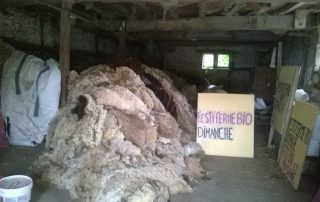
Can and Should Rural France Be Saved?*
‘When you understand that the take-it-or-leave-it prices now being offered [by wholesalers] mean that you’ll pay more to produce crops than you’ll get back in proceeds, you’re left with the choice of either becoming a [...]
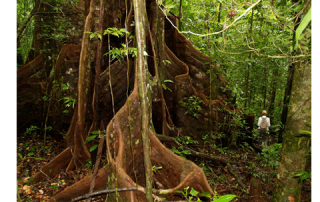
Biodiversity in South America: The Trésor Project
The Trésor Foundation was founded in 1995 by enthusiastic and committed individuals at the University of Utrecht, the Dutch, French and U.S. branches of the World Wildlife Fund (WWF) and the Dutch business community. The [...]
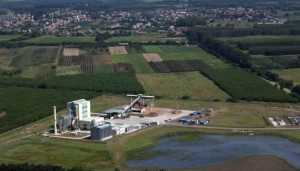
The South Nyírség Bioenergy Project – with updates
The South Nyírség region in the North-Eastern part of Hungary was traditionally an agricultural area, renowned for its tobacco and apple production. Since the transition in 1990, local agriculture has gradually lost its importance. Apple [...]