
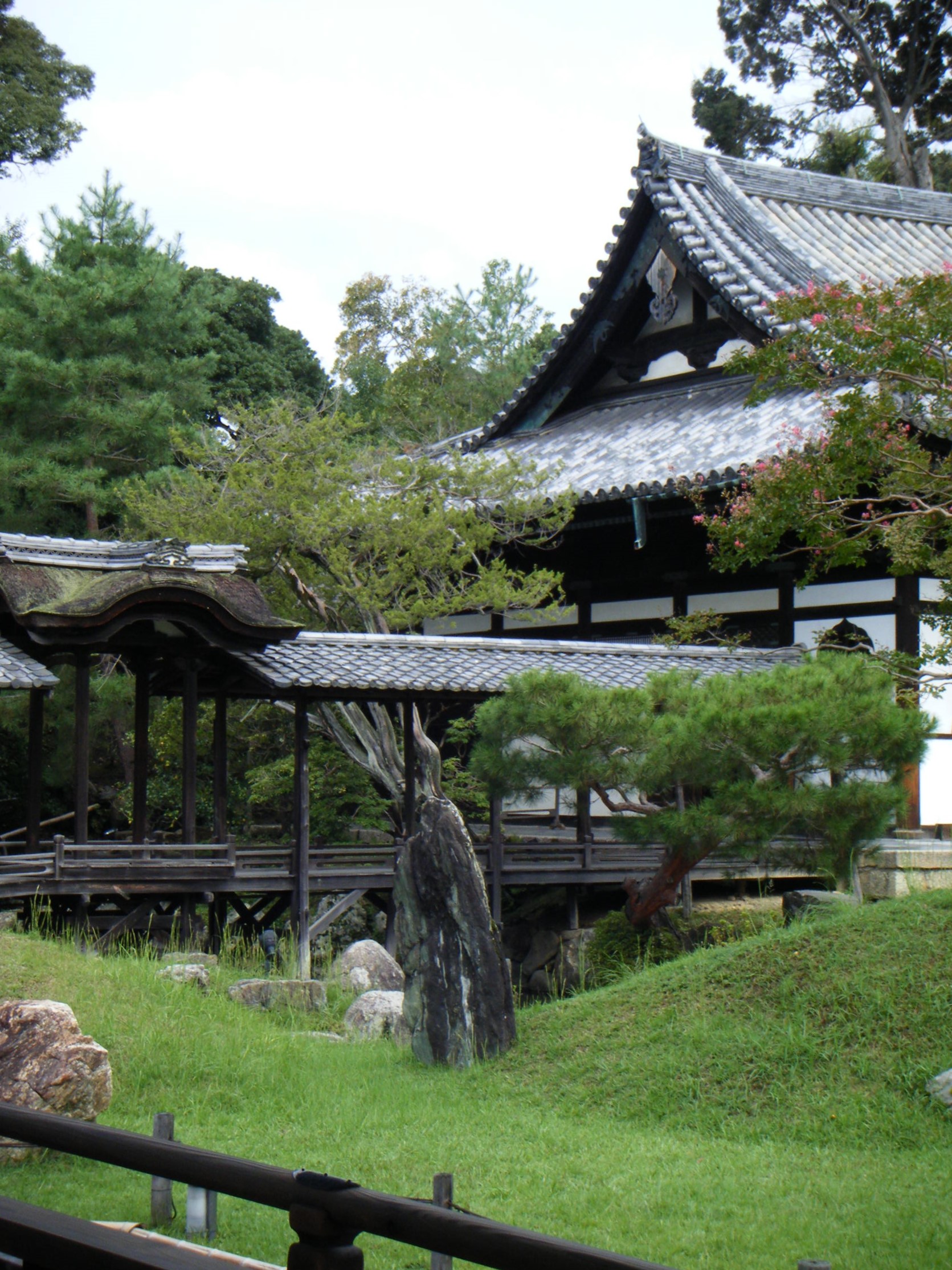
Forests in Japan have been under pressure already for millennia (Totman 1989). More than 2000 years ago, rice culture caused the first dramatic modifications of woodlands and bronze and iron smelting started to put pressure on the forest due to the demand for high-quality charcoal. Metallurgy led to new, more powerful tools and the assault on the woodlands intensified. The warrior castes needed timber for ships, stockades and large residences and for coffins buried in huge mounds rivalling the Egyptian pyramids in size. Wood was also used as fuelwood for pottery and charcoal for weapons. Farmers also needed wood for fuel but also for fodder and, most importantly, for green fertiliser material which sometimes relieved cutting pressure. There was also a large demand for the construction of monasteries, shrines and temples and, owing to termites and rot, most wooden buildings had to be rebuilt every 20 years.
The deforestation had all kinds of consequences such as wildfire, flooding and erosion, often forcing people to move. Kings and emperors often had to move, possibly because local wood supplies dwindled. There were occasional attempts to control the use of woodland on the part of governments and monasteries. Ruling warriors tightened control to assure themselves of resources for military use. It was a history of outright exploitation without concern for preservation or reforestation.
When political struggles subsided in the 17th century, population and construction rose rapidly and the demand for timber soared. The demands of the peasant families led to widespread but less intensive use than the more concentrated demands from the rulers in the cities. Logging expanded and intensified, erosion denuded mountains and damaged lowlands, and Japanese rulers were forced into a combination of regenerative forestry and imports from the tropical rain forest in nearby regions, particularly in Malaysia and Indonesia. Like with food in 19th-century Britain, the pressure on scarce land resources was relieved by importing resources from abroad. Regulation to restrain consumption was introduced, plantation forestry emerged by the late 18th century and most forested areas came under some sort of management. It is one of the reasons that Japan now remains more forested than nearly any other country in the temperate zone.
Literature
de Vries, B., and J. Goudsblom (Eds.) (2002). Mappae Mundi – Humans and their habitats in a long-term socio-ecological perspective. Myths, Maps, and Models. Amsterdam University Press, Amsterdam
Totman, C. (1989). The Green Archipelago: Forestry in Pre-industrial Japan. Berkeley, University of California Press
Leave A Comment