
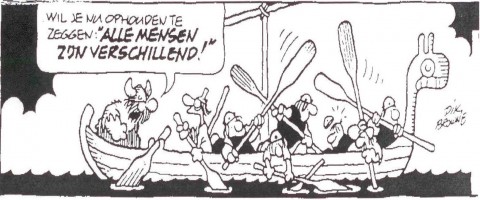
Can you please stop telling me ‘all people are different’?
A textbook on sustainable development should address public decision making and politics. Politics can be described as the area in society where issues transcending mere individual needs and activities are debated and decided and where disagreement is legitimate. It has its own rules and rites. Miklos Persanyi, former Environment Minister of Hungary, shared with me and others some experiences about life in politics. A basic rule for politicians is:
- If there is no must to decide, it is a must not to decide.
When you are in the science-policy interface dealing with politicians, obey the following rules:
- draw/keep politicians’ attention;
- speak their language: be stupidly simple/primitive, talk about money, talk about benefits for constituency/business;
- don’t use words like future, climate . . . instead, talk about costs, floods;
- become a media star, marry his/her daughter, or go golfing.
It is tempting to reproach politicians for their often narrow-minded, myopic, self-interested behaviour. But they probably represent what a postmodern, media-hyped society deserves.
On a more serious note, the notion of bounded rationality was introduced by the sociologist Simon to indicate that people usually act on the basis of a few, rather simple rules. Cognitive sciences are bringing new insights into how human process information. Individual experiences are filtered by several subsequent layers (Morecroft and Sterman 1992):
- tradition, culture and the like;
- organisational and geographical structure;
- information, management and communication systems;
- operating goals, rewards and incentives; and finally
- people’s cognitive limitations.
Illustrative examples of the first three layers in a sustainable development context are the role of tradition in the introduction of energy-efficient and solar-based cooking stoves in rural India; the role of the state in explaining why centralised nuclear power thrives in some cultures and is resisted in others; and the role of (perverse) incentives in an oil company that rewards its executives on the basis of the oil reserves at the end of the year. The rationality of decision making is perhaps even farther away from the real world than we imagined in our criticism of Homo economicus.
Leave A Comment