
CHAPTER 19
The economy
How economic life is organized is the topic of economics, from micro- to macroscale. Economic science is about human behaviour in relation to the production and consumption of goods and services and is, as such, addressed in most thematic chapters. It has become the language of power and rationality in Modernity.
- Three major forms of economic organization: state, market and community, have been around for millennia. They are often in competition and conflict, in a pendulum movement as each has a tendency to radicalize into extremes. It is a continuous struggle between state-controlled coordination from above, market power by corporations and the communities over which they try to gain control.
- Ideas about who creates economic value have changed over time, from objective standards of productivity to subjective consumer preferences/utility as reflected in the market price. The image of humans is in economics centered around the theory and practice of time preference, discounted utility and cash-flow optimization, which reflects an inherent short-termism of (textbook) consumers and producers. Externalities and rent are other relevant concepts in economics.
- Economic growth is driven by a complex of factors. One is technology, with its autonomous processes of creative destruction and long waves. Other factors are the – related – changes in demand and subsequent structural change and trade. Neoclassical economic growth models suffer from oversimplification, as the crises of the last decades have shown. New and less ideological concepts and theories are under development and can hopefully improve the role of economics in the quest for a more sustainable future.
- Economic growth is desired by governments, businesses and most of the population, for a variety of reasons. Whether economic growth is possible depends on productivity growth, but environmental and social limits will make continuous growth in average (net disposable) income improbable in many places and for many groups. Besides, past economic growth has not or even negatively affected the quest for more equality, partly because of the structure of the global financial system.
- There is a widespread feeling of discontent with the dominant capitalist system and its practices of maximizing short-term shareholder value and of socializing the costs of negative externalities. It is visible in the many seeds of change, discussed and practiced under the headings of degrowth (or décroissance), post-growth and others. It asks for new forms of solidarity with nature and among humans, and for experiments in managing commons, introducing basic income and organizing meaningful work. These challenges can and should be addressed by dialogue and alliances on controversies and worldviews.
Test your understanding of this chapter by reviewing the study questions below.
All Materials Relevant to this Chapter

Sustainable development and the financial system
“If… the ‘services’ of a landlord or hedge fund manager are treated as productive, they magically become part of GDP.” (Mazzucato 2018:97). SDG10 and the Financial System One of the Sustainable Development Goals (SDG) is [...]

Chinese Worldviews
In the book Sustainability Science, I have argued that the location of sustainability is in the center of worldview space, where the balance is found between individual and collective and between material and immaterial (§6.3). [...]
[Modelling] Economic Growth
The important problem of steady state would not be production but distribution. You can no longer avoid the problem of relative distribution by resorting to growth. (Herman Daly, personal communication) What is the essence of [...]
Input-Output Methodology
Measuring monetary flows: I-O matrices National economic models have usually more sectors than the economic growth models discussed so far. Such sectoral disaggregation is based on a table or matrix of the intersectoral flows, or [...]
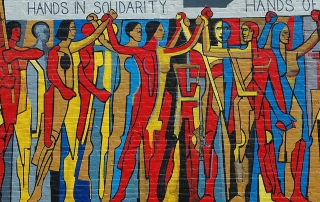
Sustainability and solidarity: recipes from a political scientist
Reading the Sustainable Development Goals (SDGs) that were agreed upon by the United Nations in 2015 in the document Transforming our world: the 2030 Agenda for Sustainable Development (sustainabledevelopment.un.org), I am struck by the high [...]
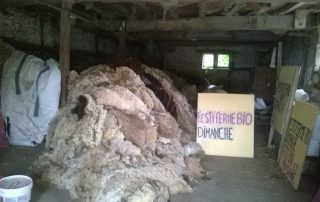
Can and Should Rural France Be Saved?*
‘When you understand that the take-it-or-leave-it prices now being offered [by wholesalers] mean that you’ll pay more to produce crops than you’ll get back in proceeds, you’re left with the choice of either becoming a [...]