
CHAPTER 16
Water: the precious resource
Water is one of the closest connections humans have with Nature, as basic need, commodity, enjoyment and threat. Its occurrence and use is inherently local and diverse. Like wind and solar energy, it is not ‘produced’ but needs investments for human use.
- The largest water use is in agriculture, notably for the age-old practice of irrigation. The other uses are domestic, commercial and industrial. Water infrastructure developed over time in Europe and USA, with piped water, sanitation and sewage, recycling and waste water treatment. These systems and their standards are becoming worldwide an aspiration under the heading of water security;
- The large trade in food items results in large virtual water trade, which can be expressed in the water footprint (WF) for (agricultural) products. The outcomes indicate a large potential for more efficient water use;
- In the last half century, there has been exponential growth in water use, which has been supplied from blue (surface and ground) water and green surface water (in soils and vegetation). Per capita water use and availability differ widely across the globe. In (semi-)arid regions, water use is the lowest but water availability also. Populations in these regions are most vulnerable to water shortages, with impacts on their health;
- Water use in agriculture depends in many places on groundwater. Although there is no overexploitation globally, in a number of regions water withdrawal is much above natural regeneration rates – its use is unsustainable. Global modelsindicate large and increasing stresses from human activities on ecosystems and, in complex interplay, on water functions and availability;
- Water governance is a contested topic, where worldviews (state versus market, amongst others) play a large role. Fieldwork in combination with agent-based models (ABM) indicate the importance of pluralism in governance, with a role for community, state and For the future, some speak of a water transition in which decentralized, contextual perceptions and nature-based solutions matter as much or more as high-tech large-scale engineering works.
Test your understanding of this chapter by reviewing the study questions below.
All Materials Relevant to this Chapter
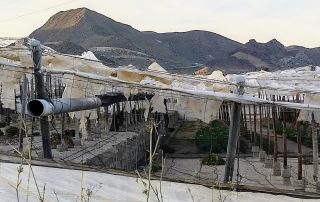
Desalinization: a necessary option?
A technology to supply water in relevant amounts is desalinization of seawater. It is at the intersection of water, food and energy issues, because the water for drinking and food is a necessity of life [...]
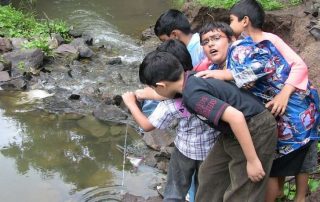
Guest post: Devnadi – the River of God
The firm house lingers, though averse to square with the new city street it has to wear A number in. But what about the brook that held the house as in an elbow-crook? I ask [...]
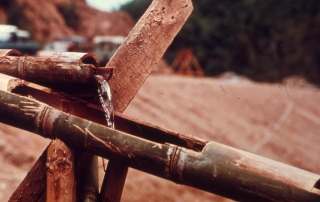
Drought: the thin line between natural and man-induced change
A simplified scheme of the hydrological stocks and flows is given below. The climate variables precipitation and temperature over time are the most important input variables. Rainwater will fall upon the vegetation and partly flow [...]
Sao Paulo drought: water shortage and water governance*
October 2014. Latin America’s biggest metropolis may, again, run out of water. For some of the 20 million residents across Sao Paulo, taps are already running dry. Dilma Pena, chief executive officer of the state-run [...]
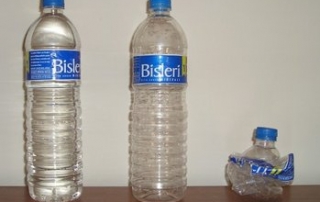
Water as a commodity: ban on bottled water in Australian town*
The market has discovered scarcity as something to be desired. The Stock Fund Utilities department of the dutch bank ING announced in 2007:”…prospects remain good. In the states of California and New York energy shortages [...]