
CHAPTER 8
Understanding, modelling, managing complexity
The parts of reality studied in sustainability science are complex, evolving socio-ecological systems (SES) and it is no easy task to assess the status and quality of scientific knowledge about them. Some reflection on epistemology, concepts and methods is necessary.
- Complexity can be conceived in terms of (degree of) objectivity and (degree of) connectivity. The NUSAP approach in post-normal science and the distinction between ‘Newtonian’ Mode-1 and transdisciplinary, participatory Mode-2 science are are among the proposals to ‘manage’ complex issues. Analyzing the situation in terms of consensus on values and consensus on knowledge is also a powerful heuristic in brokering science and policy. The distinction between natural and social sciences is always in the background;
- Models and modelling techniques are important in deepening understanding of natural and human systems. Natural and social sciences have each their own epistemological and methodological traditions and practices and the integration of concepts, theories and methods is one of the challenges in sustainability science. In particular, it is important to develop common theories of human behaviour as part of the evolving complex system science (CSS);
- There are clear limits to what can sensibly be done with formal models. Other ways of communicating scientific insights and contributing to public discourse are the use of metamodels and statistical regularities and also analogs and metaphors. Also orga nizing concepts and methods, such as transition theory, elementary models (learning-by-doing, depletion and substitution), competition-cooperation games and social dilemmas and rivalry and excludability in goods and services, support effective investigation, communication and dialogue.
Test your understanding of this chapter by reviewing the study questions below.
All Materials Relevant to this Chapter
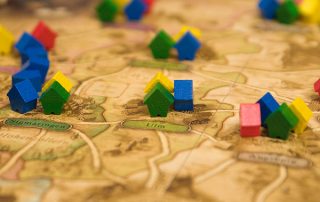
Games for sustainability education, research and policy
One way to explore integration of the natural and the social sciences is the construction and use of simulation games and policy exercises (cf. Chapter 10 and 12). Since 2013 several websites have come online [...]